> For the complete documentation index, see [llms.txt](https://features.scnd.com/llms.txt). Markdown versions of documentation pages are available by appending `.md` to page URLs; this page is available as [Markdown](https://features.scnd.com/v2.0/superadmin/contents/header-menus.md).
# Header menus
Manage pages and links of a platform.
{% hint style="info" %} ath: SBO > Content > Header Menu
{% endhint %}
* [Definition](#id-1.16.x-headermenus-definition)
* [Create a link](#id-1.16.x-headermenus-createalink)
* [Additional video](#id-1.16.x-headermenus-createalink)
* [Read a header menu](#id-1.16.x-headermenus-readaheadermenu)
* [Where users can see this content?](#id-1.16.x-headermenus-whereuserscanseethiscontent)
* [SBO Part](#id-1.16.x-headermenus-sbopart)
* [Update a header menu](#id-1.16.x-headermenus-updateaheadermenu)
* [Delete a header menu](#id-1.16.x-headermenus-deleteaheadermenu)
* [Related resources](#id-1.16.x-headermenus-relatedresources)
## Definition
The ‘Header Menu’ part is related to the links set on the header of a platform in the front interface.
These links are available for all users of the platform even if they do not have an account. This is considered strategic content for the platform.
WHO CAN USE THIS FEATURE?
Logged super-administrator or a logged administrator.
## Create a link
Create a link for the Header menu.
First, click “Add a link” (figure1).
FIgure 1
It will open a modal to fill in with information:
* The menu name (figure2), keep in mind that it will be seen by every user.
FIgure 2
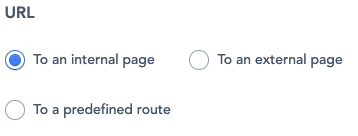
* The “URL” (figure3) which in the link type.
* Internal page: a manageable page created/set in the [Contents > Pages](/v2.0/front-office/content-page.md) part of the SBO
* External page: a page that is not saved in the SBO, can come from an external website
* Predefined route: is a page set in Second’s code. It can not be modified. It only concerns the
* ‘*Favorites*’ page
* ‘*Contact Us*’ page
FIgure 3
* The Pages will change a bit according to the choice set for the “URL” (link type).
* For the **internal page** and **predefined route** (figure4.1): click the dropdown button “*Select a page*” and choose the page in the list.
Figure 4.1
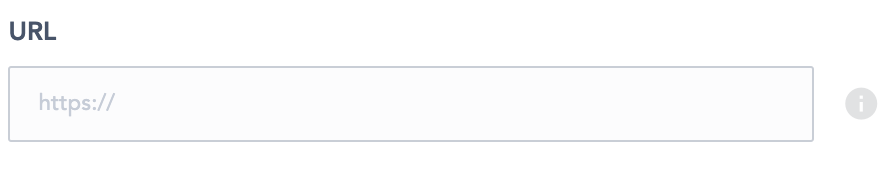
* For the **external page** (figure 4.2): fill the field below, with an external URL.
Figure 4.2
Click “*Add a link*” (figure 5) to save it.
Figure 5
## Read a header menu
### Where users can see this content?
Find the list of header menus (figure 6) added to a platform by clicking the burger menu icon at the top right corner.
FIgure 6
### SBO Part
Each link block (figure 7) is composed of:
* The header menu name
* The drag and drop icon (to reorder the links)
* The edit button
* The trash button
FIgure 7
## Update a header menu
To update a link in the header menu click “edit” (figure 8 ).
FIgure 8
The link will become editable. It works the same as the “Create a link” button described above.
The links have an order, the super-administrator can change the order with the drag-and-drop, by clicking the icon on the left side of each link block.
## Delete a header menu
Delete the page by clicking the trash icon (figure 9).
FIgure 9
The “Favorites” page can not be deleted.
## Related resources
**SBO:**
* [Pages](/v2.0/superadmin/contents/pages.md)
**Front:**
* [Front interface structure](/v2.0/front-office/front-interface-structure.md)
**Dashboard:**
* [User dashboard structure pages](/v2.0/dashboards/user-dashboard-structure-pages.md)
---
# Agent Instructions
This documentation is published with GitBook. GitBook is the documentation platform designed so that both humans and AI agents can read, navigate, and reason over technical content effectively. Learn more at gitbook.com.
## Querying This Documentation
If you need additional information that is not directly available in this page, you can query the documentation dynamically by asking a question.
Perform an HTTP GET request on the current page URL with the `ask` query parameter, and the optional `goal` query parameter:
```
GET https://features.scnd.com/v2.0/superadmin/contents/header-menus.md?ask=&goal=
```
`ask` is the immediate question: it should be specific, self-contained, and written in natural language.
`goal` is optional and describes the broader end goal you are ultimately trying to accomplish on behalf of the user. GitBook uses it to tailor the answer towards what is most useful for that goal.
The response will contain a direct answer to the question and relevant excerpts and sources from the documentation.
Use this mechanism when the answer is not explicitly present in the current page, you need clarification or additional context, or you want to retrieve related documentation sections.