> For the complete documentation index, see [llms.txt](https://features.scnd.com/llms.txt). Markdown versions of documentation pages are available by appending `.md` to page URLs; this page is available as [Markdown](https://features.scnd.com/v2.0/superadmin/users/contact-management.md).
# Contact management
Allows you to find all the messages sent via the platform "Contact" page
{% hint style="info" %}
*Path: SBO > Users > Contact*
{% endhint %}
* [Definition](#id-1.16.x-contactmanagement-definition)
* [Create a Contact](#id-1.16.x-contactmanagement-createacontact)
* [Read the Contact in the SBO](#id-1.16.x-contactmanagement-readthecontactinthesbo)
* [Inbox detail](#id-1.16.x-contactmanagement-inboxdetail)
* [Message info](#id-1.16.x-contactmanagement-messageinfo)
* [Subject](#id-1.16.x-contactmanagement-subject)
* [Customer message](#id-1.16.x-contactmanagement-customermessage)
* [Update Contact](#id-1.16.x-contactmanagement-updatecontact)
* [Delete Contact](#id-1.16.x-contactmanagement-deletecontact)
* [Related resources](#id-1.16.x-contactmanagement-relatedresources)
## Definition
The “Contact” section is about messages sent by users from the “Contact” page on the front side.
These messages can be sent from logged and unlogged users.
For each message sent from the contact page, a email is sent to the administrator email (platform configuration).
WHO CAN USE THIS FEATURE?
Logged super-administrator and administrator
## Create a Contact
A super-administrator and administrator can not create a contact message, this is only for the users of a platform.
## Read the Contact in the SBO
Super-administrators and administrators can have access to the inbox, by clicking the letter icon at the top right corner of the screen.\
Super-administrators and administrators can see a notification value on this icon when there are unread messages (figure 1)
Figure 1
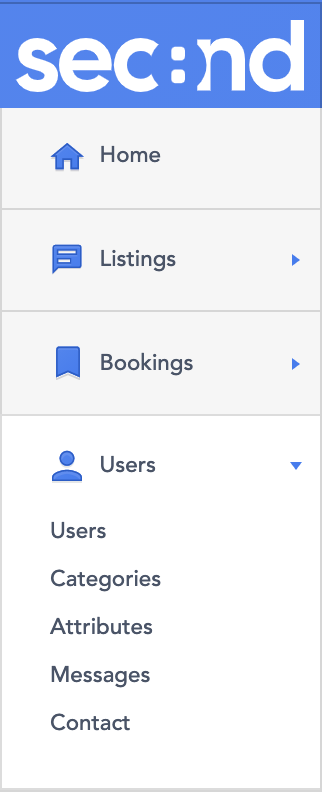
However, super-administrators and administrators can also access the Inbox by clicking “Contact” on the left-hand side menu (figure 2)
Figure 2
Super-administrators and administrators can see all contact messages sent on a platform. A contact message item is created for each message sent (figure 3).
FIgurre 3
Each item is composed of:
* The subject of the message
* “From:” is the Sender’s full name
* The sender's email address
* Time and date of the sent message
The blue dot (figure 3) next to the subject message indicates that the message is unread.
To see the details of the message, click the folder icon that will appear when you hover your mouse on the contact item.
### Inbox detail
Here, super-administrators and administrators can see the message details, organized into several cards.
#### Message info
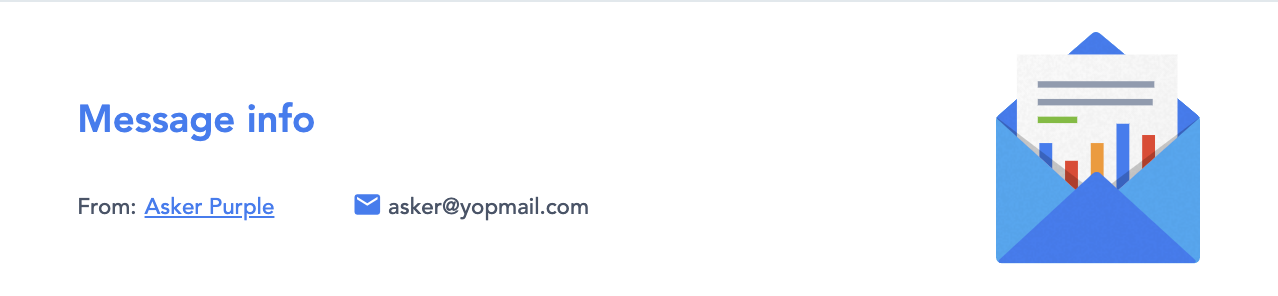
The message info card (figure 4) gives the super-administrator and administrator the full name and email of the user who reaches out.
By clicking the e-mail, it will automatically open a new email with that contact email address as the recipient.
{% hint style="success" %} If the full name is underlined and highlighted in blue, clicking it will redirect you to the user’s details page in the SBO.
{% endhint %}
Figure 4
#### Subject
The subject card (figure 5) will display the subject of the contact message.
Figure 5
#### Customer message
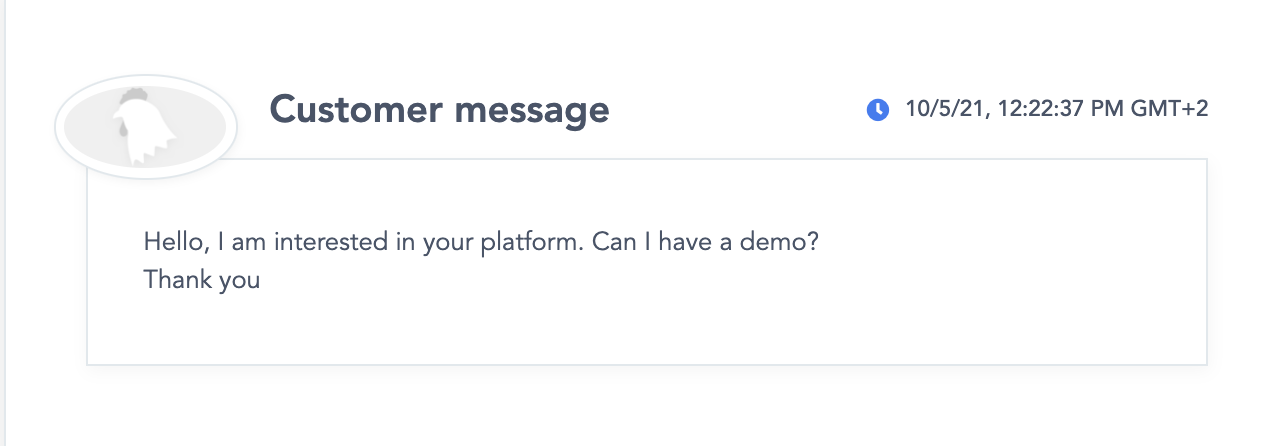
The customer message card (figure 6) allows the super-administrator and administrator to see in detail the message sent by the user.
they can also see the time and date the message was sent and the time zone.
Figure 6
## Update Contact
Super-administrators and administrators can not update a contact message. They can only read it or delete it.
To answer it they have to write an email with their mailing tool.
## Delete Contact
*To delete a contact message, super-administrators and administrators can only do it by going through one path:*
{% hint style="info" %}
*Path: SBO > Users > Contact > Contact details > Delete*
{% endhint %}
Click the pen feature from a contact message item. It will redirect you to the contact message details page. Then click “*Delete*” (figure 7) on the side card.
Figure 7
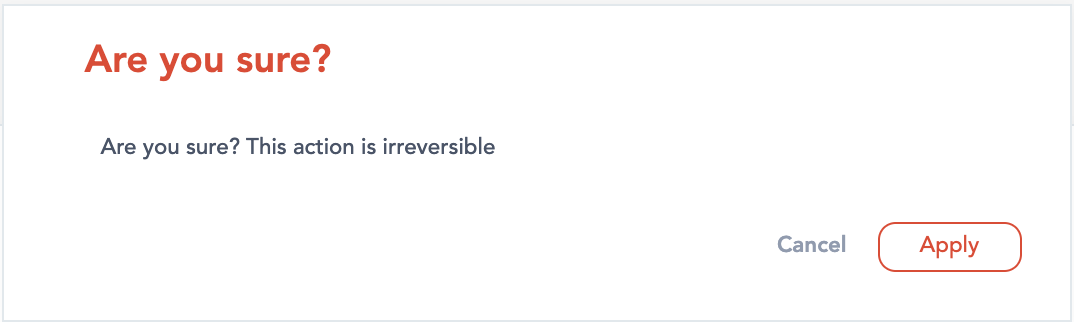
By clicking it, a confirmation message will appear (figure 8). Click apply to delete or click cancel.
Figure 8
## Related resources
**Front:**
* [Contact page](/v2.0/front-office/contact-page.md)
---
# Agent Instructions
This documentation is published with GitBook. GitBook is the documentation platform designed so that both humans and AI agents can read, navigate, and reason over technical content effectively. Learn more at gitbook.com.
## Querying This Documentation
If you need additional information that is not directly available in this page, you can query the documentation dynamically by asking a question.
Perform an HTTP GET request on the current page URL with the `ask` query parameter, and the optional `goal` query parameter:
```
GET https://features.scnd.com/v2.0/superadmin/users/contact-management.md?ask=&goal=
```
`ask` is the immediate question: it should be specific, self-contained, and written in natural language.
`goal` is optional and describes the broader end goal you are ultimately trying to accomplish on behalf of the user. GitBook uses it to tailor the answer towards what is most useful for that goal.
The response will contain a direct answer to the question and relevant excerpts and sources from the documentation.
Use this mechanism when the answer is not explicitly present in the current page, you need clarification or additional context, or you want to retrieve related documentation sections.